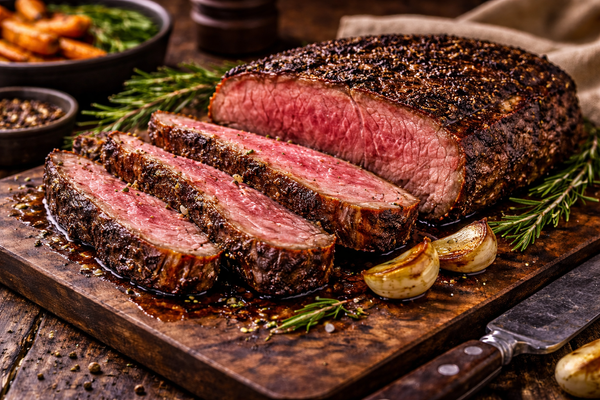
Butter Basted Rib Eye with Garlic and Thyme
Introduction
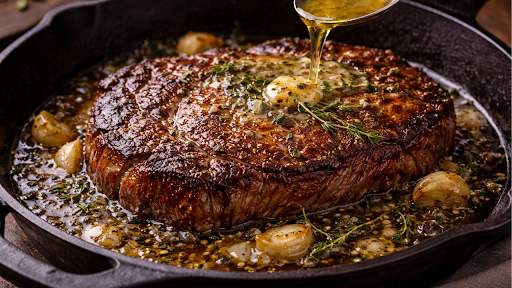
Butter basting is the steakhouse technique that turns a good rib eye into a great one. As the steak finishes cooking, foaming butter infused with garlic and thyme is spooned over it again and again, building a glossy, deeply flavoured crust and carrying aromatic richness into every bite. Rib eye, with its heavy marbling, is the ideal cut for it.
This is a simple, high reward cook for a quality rib eye. Sear hard to build a crust, then baste in butter to finish, and rest before slicing.
Ingredients
For 2 servings
- 2rib eye steaks3-4cm thick, at room temperature
- 2 tspsea salt
- 1 tspblack pepperfreshly cracked
- 1 tbspbeef tallow
- 50gbutter
- 3 clovesgarlicsmashed
- 3 sprigsthymefresh
Utensils
5 items to gather · Tap to tick off
- Heavy cast iron pan
- Spoon
- Tongs
- Meat thermometer
- Chopping board
Cooking Steps
Season and temper
Bring the steaks to room temperature and pat dry. Season generously with salt and pepper on all sides.
Heat the pan
Heat a heavy cast iron pan over high heat, add the tallow, and let it shimmer.
Sear
Sear the steaks for 2 to 3 minutes per side until a deep crust forms, rendering the fat edge as well.
Add the butter
Lower the heat, add the butter, garlic, and thyme, and let the butter foam.
Baste
Tilt the pan and spoon the foaming butter over the steaks continuously for 1 to 2 minutes. Pull at 52 to 54°C for medium rare.
Rest and serve
Rest for 5 to 6 minutes, then slice against the grain and serve with the pan butter spooned over.
Nutrition
Per Serving
Recipe serves 2Nutritional values are estimates only and may vary based on specific ingredients, brands, cuts, cooking method, and portion sizes. For medical or dietary purposes, please consult a qualified nutritionist.
Tips and Pairing
People Also Ask
What is butter basting a steak? +
Butter basting means spooning hot, foaming butter over a steak as it finishes cooking, usually with garlic and herbs added to the pan. It builds a richer crust, adds aromatic flavour, and helps cook the top of the steak evenly. It is the classic finishing move used in steakhouses for cuts like rib eye.
When do you add butter when cooking steak? +
Add butter near the end, after you have built a crust with a hot sear, then lower the heat so the butter foams without burning. Adding it too early scorches the milk solids and leaves a bitter taste. The last minute or two of basting is when the butter does its work.
What temperature is medium rare rib eye? +
Pull rib eye at 52 to 54°C for medium rare, then rest it for 5 to 6 minutes, during which it climbs a couple of degrees. Rib eye is marbled enough to stay juicy a little past this, but medium rare is where its fat and flavour are at their best. Use a thermometer for accuracy.
How do you stop the butter from burning? +
Lower the heat before adding the butter, and keep it moving by basting constantly, which keeps the temperature down. The garlic and herbs also tell you when it is right, since they should sizzle gently, not scorch. If the butter browns too fast, pull the pan off the heat for a moment.
Why is rib eye good for basting? +
Rib eye has heavy internal marbling and a fat cap, so it takes well to the rich, buttery finish without becoming heavy or dry. The fat renders as it sears and the basting builds on that flavour. Leaner cuts benefit from basting too, but rib eye is the natural match for the technique.