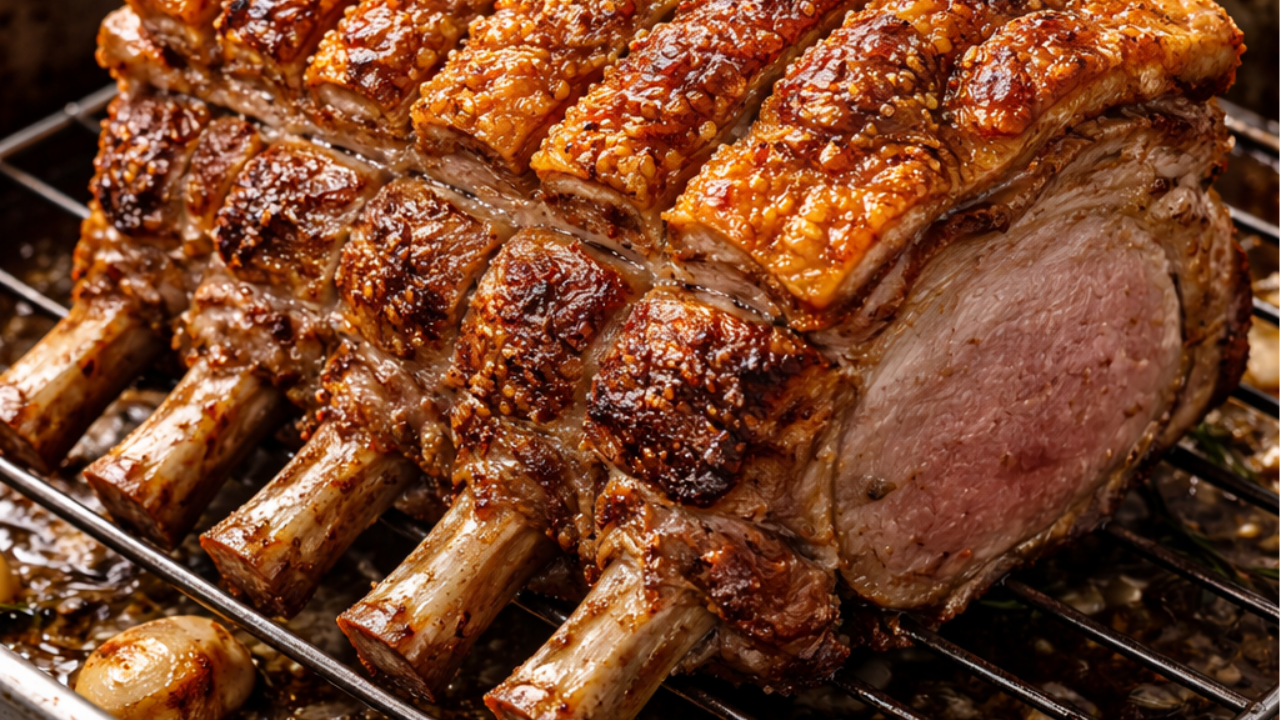
Free Range Pork Rib Roast with Crackling
Introduction
A free range pork rib roast delivers rich flavour and beautiful fat coverage, but the real hero is the crackling. When the skin is properly dried and roasted hot, it blisters into crisp, golden perfection. This method comes down to moisture control, salt, and a temperature shift, giving you juicy pork with shattering crunchy skin every time.
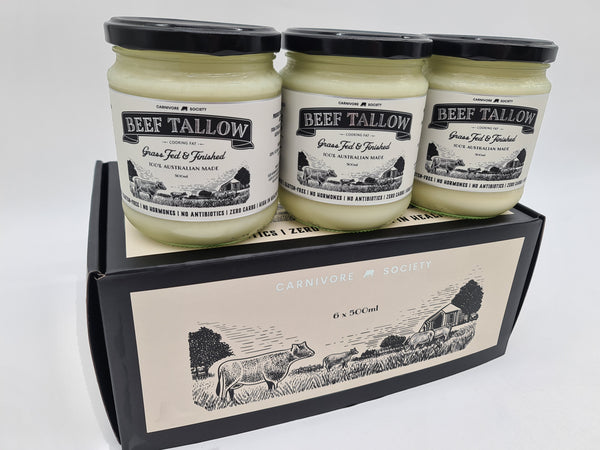
Start with a good free range pork rib roast, skin on. A premium fat like beef tallow is handy for crisp roast potatoes alongside it.
Ingredients
For 7 servings
- 2.5-3kgfree range pork rib roastskin on
- 2 tbspcoarse sea salt
- 1 tbspolive oil
- cracked black pepperto season
- 2 clovesgarliccrushed
- 1 tspfennel seedslightly crushed, optional
Utensils
5 items to gather · Tap to tick off
- Roasting tray with rack
- Sharp knife
- Meat thermometer
- Paper towel
- Chopping board
Cooking Steps
Dry the skin
Pat the pork skin completely dry. For the best result, leave it uncovered in the fridge overnight to dry further.
Score the skin
Using a sharp knife, score the skin at 1cm intervals, cutting through the skin but not into the meat.
Season
Rub olive oil over the skin and press coarse salt firmly into the scored lines. Season the underside with pepper, garlic, and fennel if using.
Start hot
Preheat the oven to 240°C. Place the pork on a rack in a roasting tray and roast for 20 to 25 minutes until the skin blisters and puffs.
Reduce and finish
Lower the oven to 170°C and roast for another 60 to 90 minutes, until the internal temperature reaches 63 to 68°C.
Rest
Rest for 15 to 20 minutes before carving, keeping the crackling crisp while the meat stays juicy.
Nutrition
Per Serving
Recipe serves 7Nutritional values are estimates only and may vary based on specific ingredients, brands, cuts, cooking method, and portion sizes. For medical or dietary purposes, please consult a qualified nutritionist.
Tips and Pairing
People Also Ask
How do you get crispy crackling on pork? +
Dry the skin thoroughly, ideally uncovered in the fridge overnight, score it, then rub with oil and press salt into the lines. Roast hot at 240°C to blister the skin, then drop to 170°C to cook the meat. Dry skin, salt, and a hot start are what turn the skin into crisp, golden crackling.
What temperature do you cook pork rib roast to? +
Cook a free range pork rib roast to an internal 63 to 68°C, then rest it. Modern advice allows pork to be pulled at 63°C with a blush of pink, staying juicy, while 68°C gives a more traditional finish. Resting lets the temperature settle and the juices redistribute.
Why score the skin on a pork roast? +
Scoring the skin at regular intervals lets the fat underneath render and helps the salt and oil reach the surface, which is essential for even, crisp crackling. Cut through the skin and fat but not into the meat, or the juices escape and the surface steams instead of crisping.
Should you salt pork skin before roasting? +
Yes. Rubbing oil and pressing coarse salt into the scored skin draws out moisture and seasons the surface, both of which help it crackle. Combined with drying the skin first, the salt is one of the simplest and most reliable steps for crisp crackling.
Why rest a pork roast? +
Resting for 15 to 20 minutes lets the juices redistribute so the meat stays moist when carved, while the temperature evens out. Rest the roast uncovered and skin side up so the crackling stays crisp, since covering it with foil traps steam and softens the skin.