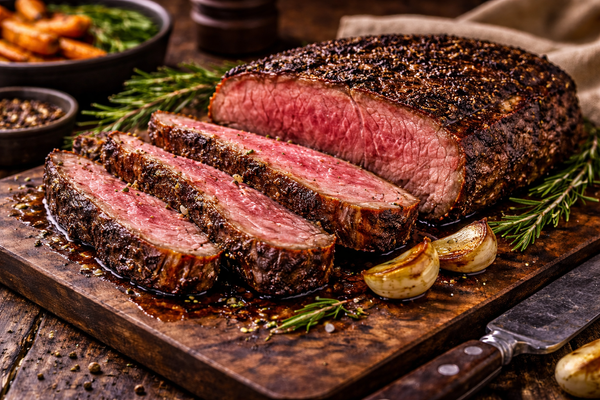
Reverse Seared Scotch Fillet with Garlic Tallow Baste
Introduction
Scotch fillet is one of the most rewarding steaks to reverse sear. Its heavy marbling bastes the meat from the inside as it cooks, giving you a buttery, tender result with deep, beefy flavour. A thick, well marbled grass fed scotch fillet is ideal here, because the slow start and hot finish need a generous cut to work with.
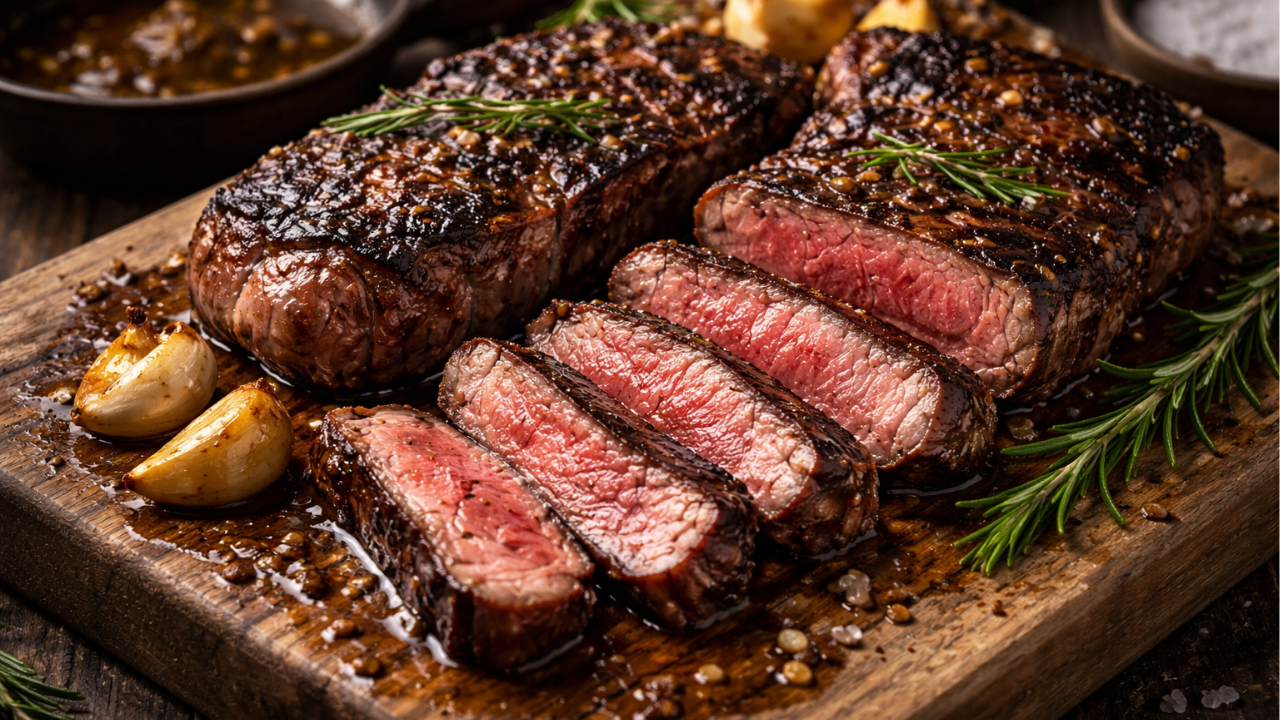
The reverse sear method gives you complete control. A low oven brings the centre up gently and evenly, so you avoid the grey band a screaming hot pan alone can leave behind. A final sear in garlic infused beef tallow then builds a dark, crisp crust and a glossy, aromatic finish. It is a restaurant result you can hit reliably at home, and it suits entertaining since the slow phase is largely hands off.
Ingredients
For 4 servings
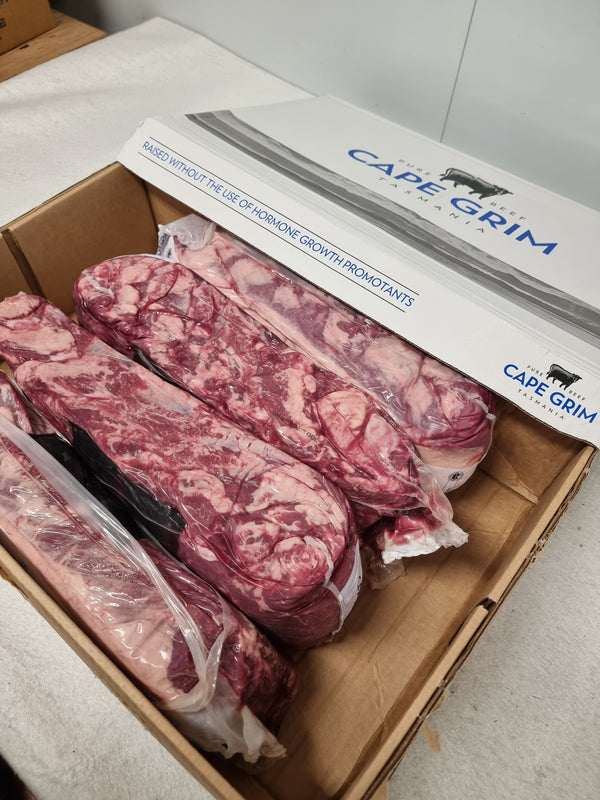
- 1.2-1.5kggrass fed scotch filletbone-in or boneless, at room temperature
- 3 tbspbeef tallow
- 3 clovesgarlicsmashed
- 2 sprigsrosemaryfresh
- 2 sprigsthymefresh
- 1.5 tspsea salt
- 1 tspblack pepperfreshly cracked
Utensils
5 items to gather · Tap to tick off
- Wire rack and oven tray
- Heavy cast iron pan
- Meat thermometer
- Tongs
- Chopping board
Cooking Steps
Season and temper
Take the scotch fillet out of the fridge 30 to 45 minutes before cooking and pat it completely dry. Season generously with sea salt and cracked pepper on all sides.
Slow roast in a low oven
Preheat the oven to 110°C. Sit the beef on a wire rack over a tray and cook until the centre reaches 48°C for medium rare or 52°C for medium, usually 35 to 45 minutes depending on thickness. Use a meat thermometer for accuracy.
Heat the pan
Heat a heavy cast iron pan over high heat until very hot, then add the beef tallow and let it shimmer.
Sear hard
Place the beef in the pan and sear for 45 to 60 seconds per side until a deep brown crust forms. Do not move it while the crust develops.
Baste with garlic tallow
Add the smashed garlic, rosemary, and thyme. Tilt the pan and spoon the hot tallow over the beef for 30 to 45 seconds to build flavour and lift the crust.
Rest
Transfer to a board and rest for 5 to 10 minutes. The internal temperature will climb a few degrees as it rests.
Slice and serve
Slice against the grain and serve immediately.
Nutrition
Per Serving
Recipe serves 4Nutritional values are estimates only and may vary based on specific ingredients, brands, cuts, cooking method, and portion sizes. For medical or dietary purposes, please consult a qualified nutritionist.
Tips and Pairing
People Also Ask
What is the reverse sear method for scotch fillet? +
Reverse searing means cooking the scotch fillet slowly in a low oven first, then finishing it with a hot sear. The gentle heat brings the inside up to temperature evenly, so you get edge to edge pink instead of a grey band, while the final sear builds a deep, crisp crust. It suits thick cuts best.
What temperature should I pull scotch fillet for medium rare? +
Pull the scotch fillet from the oven at around 48 to 50°C, then sear it hard. After searing and a 5 to 10 minute rest, it will settle near 54 to 56°C for a juicy medium rare. A meat thermometer is the most reliable way to hit your preferred doneness with a thick cut.
Why baste scotch fillet in garlic tallow? +
Basting in hot, garlic infused beef tallow adds richness, aroma, and a deeper crust without masking the beef. Spooning the fat over the steak in the final 30 to 45 seconds carries the flavour of garlic and herbs across the surface and helps the crust turn glossy and golden.
How long should scotch fillet rest after cooking? +
Rest scotch fillet for 5 to 10 minutes after searing. Resting lets the juices redistribute through the meat so they stay in the steak when you slice, not on the board. The internal temperature also rises a few degrees during the rest, which is worth allowing for when you pull it.
Is scotch fillet the same as rib eye? +
In Australia, scotch fillet and rib eye come from the same rib primal. Scotch fillet is the boneless rib eye, prized for its marbling and buttery texture, while rib eye usually keeps the bone in. Both reverse sear beautifully thanks to their generous fat content.