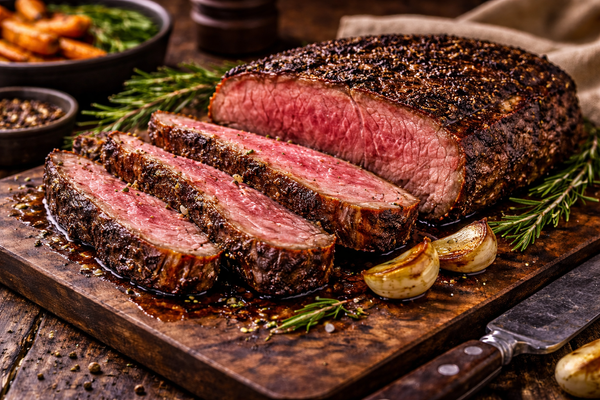
Rib Eye Steak with Crispy Fat Cap and Herb Butter
Introduction
A good rib eye does not need much. Heavy marbling through the eye and a thick fat cap mean the cut bastes itself as it cooks, turning rich, juicy, and full of flavour. The step most home cooks miss is rendering that fat cap properly so it crisps instead of turning chewy, then finishing with a simple herb butter that lifts the beef rather than hiding it.
This method works for a thick, bone-in or boneless rib eye. You stand the steak on its fat edge first to render and crisp it, build a deep crust on each side, then rest it under a slice of garlic and herb butter so it melts into every bite. It is a steakhouse plate you can put together in about 20 minutes.
Ingredients
For 2 servings
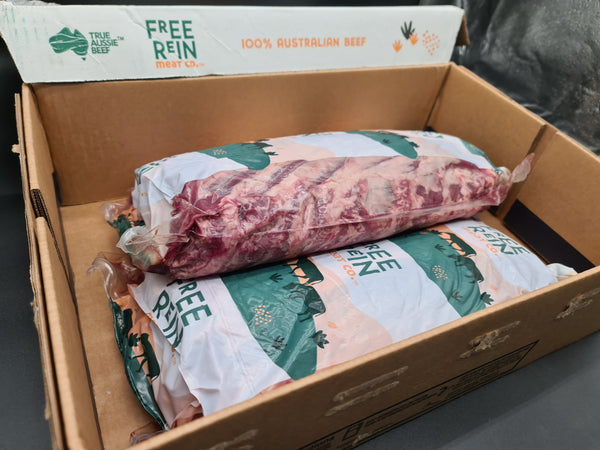
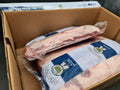
- 2rib eye steaks3-4cm thick, at room temperature
- 2 tspsea salt
- 1 tspblack pepperfreshly cracked
- 1 tbspbeef tallowor neutral high smoke point oil
- 60gunsalted buttersoftened, for the herb butter
- 1 clovegarlicfinely minced, for the herb butter
- 1 tbspparsleyfinely chopped, for the herb butter
- 1 tspthyme leavesfresh, for the herb butter
- 1 pinchsaltfor the herb butter
Utensils
6 items to gather · Tap to tick off
- Cast iron pan
- Tongs
- Chopping board
- Small bowl
- Baking paper
- Meat thermometer
Cooking Steps
Make the herb butter
Mash the softened butter with the garlic, parsley, thyme, and a pinch of salt. Roll in baking paper and chill, or keep it soft to use straight away.
Season and temper
Take the steaks out of the fridge 30 minutes before cooking and pat them dry. Season generously with salt and pepper on all sides, including the fat cap.
Render the fat cap
Heat a cast iron pan over medium high heat and add the tallow. Using tongs, hold the steaks on their fat edge against the pan for 2 to 3 minutes until the fat renders and turns golden and crisp. This builds flavour and stops the fat being chewy.
Sear
Lay the steaks flat and sear for 2 to 3 minutes per side for medium rare, adjusting for thickness. Leave them to form a crust rather than moving them around. Pull at 52 to 54°C for medium rare or 57°C for medium.
Rest with butter
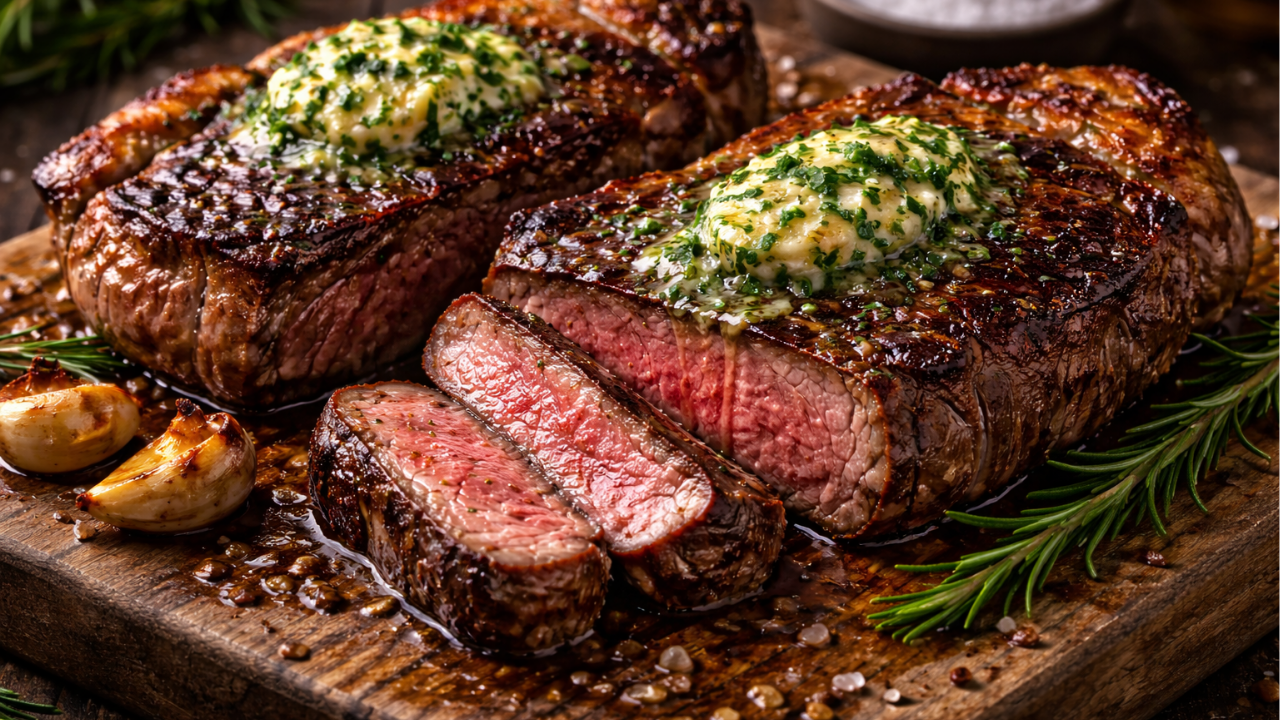
Transfer to a board and rest for 5 to 8 minutes. Top each steak with a slice of herb butter while still warm so it melts over the surface.
Slice and serve
Slice against the grain and serve immediately with the melted butter spooned over.
Nutrition
Per Serving
Recipe serves 2Nutritional values are estimates only and may vary based on specific ingredients, brands, cuts, cooking method, and portion sizes. For medical or dietary purposes, please consult a qualified nutritionist.
Tips and Pairing
People Also Ask
How do you get a crispy fat cap on rib eye? +
Render it first. Stand the rib eye on its fat edge in a hot pan, holding it with tongs for 2 to 3 minutes until the fat turns golden and crisp before you sear the flat sides. Rendering the fat slowly stops it being rubbery and adds rich flavour to the crust and the pan.
What temperature is medium rare for rib eye? +
Pull rib eye at 52 to 54°C for medium rare, or 57°C for medium, then rest it for 5 to 8 minutes. The temperature climbs a couple of degrees during the rest. A meat thermometer is the most reliable guide, especially for thick steaks where the outside can mislead you.
Should you put herb butter on before or after cooking? +
After. Add herb butter once the rib eye is cooked and resting so it melts gently over the surface rather than burning in the pan. The residual heat softens the butter into a sauce that carries garlic and herbs across the steak without scorching the milk solids.
Is rib eye the same as scotch fillet? +
They come from the same rib primal. In Australia, scotch fillet is the boneless version and rib eye is usually sold bone in. Both are heavily marbled and suit fast, high heat cooking, so this method works for either cut with only minor timing changes.
Can I cook rib eye without a thermometer? +
You can, but a thermometer takes the guesswork out of a thick, expensive cut. Without one, sear 2 to 3 minutes a side for medium rare, then rest and check by feel using the firmness test. A thermometer simply makes a perfect result repeatable.