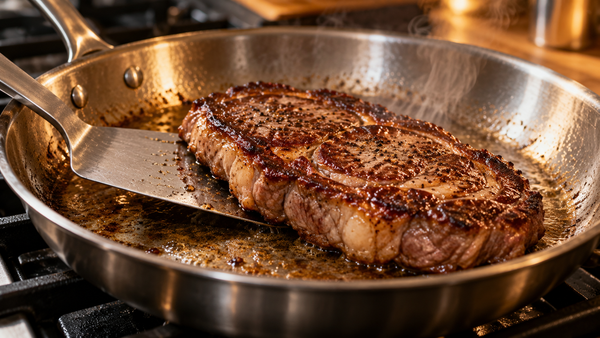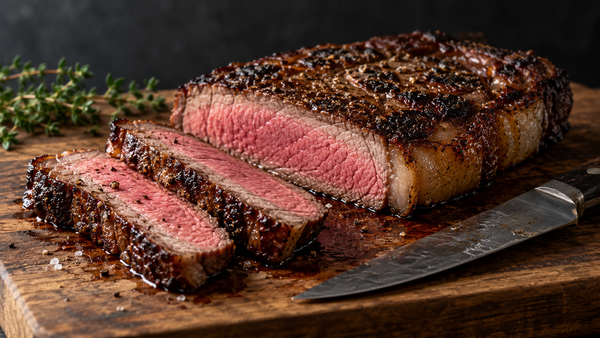

Steak not browning usually means the surface is too wet, the pan is losing heat or the meat is not making even contact.
Before adding more time, check what is happening in the pan and how far the centre has already cooked, because a pale steak can already be close to done.
The right fix depends on whether you see liquid pooling around the meat, patchy colour or burnt seasoning, so diagnose the cause first and adjust one thing at a time.
What does steak not browning look like?
Steak not browning shows up as a surface that stays pale or grey in the pan instead of developing a deep brown crust. A grey layer inside a sliced steak is a different observation, and colour changes in raw packaged meat call for a separate check of the product and how it has been handled.
Australian Beef explains that browning creates flavour and aroma on the meat's surface, which is quite separate from the colour change through the centre. That crust is a big part of the appeal of marbled beef cuts for pan searing, so it is worth diagnosing properly rather than simply cooking for longer.
Look at the whole face, not one attractive corner. A pale centre with dark edges points to a different cause from a uniformly pale steak sitting in liquid. Note whether the surface was plain, salted or covered in marinade before you turn up the heat or leave it cooking for a few more minutes.
A thin steak may also simply cook through before a thick crust has time to form, which is a matter of expectation rather than a fault.
Is moisture or crowding stopping the crust?

A damp surface and a crowded pan are common reasons a steak steams instead of browning, so fix the preparation and batch size before chasing colour. Australian Beef identifies surface moisture and crowding as common obstacles to browning.
Pat plain steak dry with kitchen paper before cooking, and follow the recipe's draining or blotting directions for a marinated one. Steak that has just come out of its vacuum pack after thawing cryovaced meat in the fridge needs the same careful blotting. Never pour leftover marinade into a pan where you want the meat to brown.
Cook a manageable number of steaks with clear space around each, in a pan that suits the burner. A pan can physically hold several steaks yet struggle to stay hot when they all go in together, so separate batches are often the better choice.
| What you see | First question to ask |
| Liquid between closely packed steaks | Is the batch too large for this pan and burner? |
| One side of the pan browns more strongly | Is the pan sitting centrally over the heat? |
| Only small patches develop colour | Are the steak and pan making even contact? |
| Seasoning darkens before the meat | Does the coating suit this heat and method? |
With a whole cut such as a Bass Strait grass-fed rump, plan steak sizes around the cookware you own, because the weight on the pack says nothing about the pan space each steak needs. If liquid gathers, handle the hot pan carefully and never add water to hot oil.
Why are some patches brown and others pale?

Patchy colour points to uneven contact, so check the steak's shape and how much of the pan is properly heated. Set the steak down so it lies naturally on the surface. A folded corner, an uneven face or a bone that holds part of the meat away from the base all change where contact happens.
If you portion a whole cut yourself, aim for reasonably even faces. A heavy, flat pan, like the one used for a tallow-seared cast iron cube roll, gives broader contact than a grill, whose dark lines are a different finish rather than a fault in the lighter areas between them.
Avoid pressing repeatedly just to make the crust look uniform, and if the pan or grate is warped, follow the maker's advice rather than weighting the meat. All-Clad's care guidance notes that different cookware materials need their own care, so check your pan's instructions before changing preheating or heat settings.
If you photograph results to compare, use similar lighting and the same face, because a glossy coating, a shadow or a new camera angle can make a crust look dramatically different.
Is the coating changing what you see?
Judge the meat's surface separately from darkened spices, butter solids or sauce. A coloured coating can make a pale steak look browned, while black flecks may be burnt seasoning rather than a desirable crust. Smell and appearance describe the problem, but neither replaces a proper doneness check.
Read the recipe's order before you start. If butter, garlic or a glaze belongs near the finish, adding it at the beginning changes the process. For a plain comparison, keep the seasoning simple and repeatable so you know the colour came from the meat and not the sauce.
Choose the fat and heat to suit the method and cookware. Whether you sear in oil or grass-fed beef tallow, more fat does not remove water, create pan space or flatten an uneven steak. Turning the burner to maximum can create a new problem before it solves the old one, so make one deliberate change and watch what happens.
Note which coating you used and when it went in, because that detail makes the next comparison far clearer than a general sense that the steak needed more colour.
When should you stop trying to darken the crust?

Stop chasing colour once more searing would take the centre past the doneness you are aiming for. Check the centre with a suitable food thermometer and follow the recipe and food-safety guidance for that product, because resting afterwards cannot undo extra cooking.
The NSW Food Authority notes that colour is not always a reliable indicator and treats intact steak differently from mince, so a browned exterior is never permission to apply whole-steak preferences to every beef preparation.
For a thin steak that is already cooked through, accept a lighter crust and use what you learned next time. For a thicker steak whose centre still needs cooking, follow a method suited to its thickness rather than holding the outside over intense heat while the middle catches up.
Before your next cook, note the thickness, whether liquid collected and when you checked the centre. Even a premium cut such as an OBE Organic grass-fed scotch cube roll cannot make up for crowding or a wet surface, so one controlled change, such as a smaller batch with a dry surface, is the best next step.
Conclusion
A pale steak usually comes down to moisture, crowding or contact, not the meat itself.
Dry the surface, give each steak room and check the centre before you chase more colour.
Put those habits to work on Carnivore Society's scotch fillet range, cut to an even thickness for your pan.