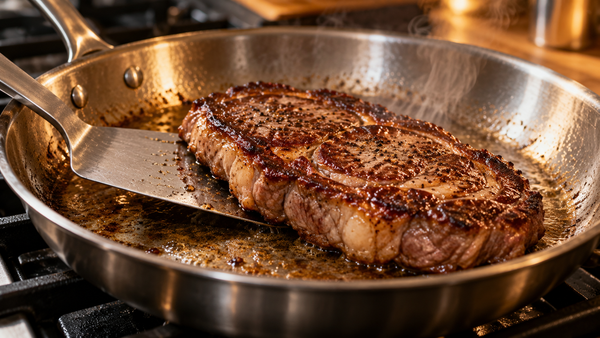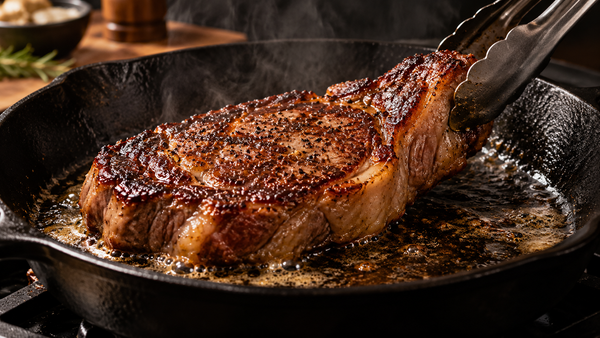

A steak grey band is the more cooked layer between the crust and the pink centre, and you reduce it by matching the method to the steak's thickness and checking the centre with a thermometer.
The band reflects the difference in heat between the outside and the middle, so it is not a defect you can trim away before cooking.
Aim for a steak you genuinely enjoy eating, rather than chasing a perfectly uniform pink slice from an edited photograph.
What is a steak grey band?
A steak grey band is the beige or greyish layer beneath the crust that surrounds a pinker centre when you slice the steak. The crust is the very outside, and the transition below it can be gradual, uneven or more pronounced on one face. A thin cooked edge is not automatically a sign that dinner went wrong.
ThermoWorks describes a temperature gradient as the difference between hotter outer layers and a cooler centre. That gradient helps explain the band and why cooking continues for a while after the meat leaves the heat, but it does not let you read a temperature from a photograph.
Before changing your method, pin down what bothers you. Is the steak dry at the edges, uneven through its thickness, or simply less pink than a picture online? Eating quality and your intended doneness matter more than the width of a line on the board.
This is about a cooked cross-section only. Grey patches on raw meat are a separate question, judged by how the steak has been stored and how long steak lasts in the fridge, not by colour alone.
What can the shape of the band tell you?

The pattern of the band points you to the question worth asking next, not to one definite cooking mistake. A deeper band on one face suggests reviewing how that face met the heat, while a broad band all the way around raises questions about the whole method and the endpoint.
| What you see after slicing | Question for the next cook |
| One face has a deeper cooked layer | Did that face get different contact or exposure? |
| The tapered end is more cooked | Was the portion uneven in thickness? |
| Nearly the whole slice is grey | Did the endpoint go past what you intended? |
| The centre varies between slices | Were the slices from comparable positions? |
Treat these as starting points rather than a diagnosis. Thickness, shape and preparation can differ within the same purchase, so compare a slice from the broad middle with another middle slice instead of judging the whole steak from an end piece.
Check the raw portion as well. A thick centre and thin tail cannot be described by one weight, so note the narrowest and thickest areas before choosing a plan, and consider saving an irregular end for another meal. A quick sketch marked with the side that first touched the pan makes an uneven result far easier to read afterwards.
Which cooking method helps reduce a grey band?

Choose a complete method that suits the thickness, because how the centre cooks and when the crust forms both shape the band. A thick steak gives you different options from a thin one, and applying one sequence to both, then judging them against the same photograph, sets up an unrealistic expectation.
In a reverse sear, a gentle stage comes before the final browning, and ThermoWorks explains how that order can moderate the gap between outer and inner temperatures. It is a method to manage, not a guarantee, because the final sear still adds heat and the steak still needs checking.
A recipe for reverse-seared scotch fillet sets out the full sequence on a specific cut, so treat its timings as guidance for your own steak and equipment. A sous vide scotch fillet finished in cast iron follows the same gentle-then-brown order.
Avoid building a method from isolated social media tips. One clip's oven stage, another cook's pull temperature and a third person's long sear may not belong together, so pick one credible method, follow its full sequence and note what you would adjust.
What should you measure during the cook?

Record the centre readings and the cooking stages, because a slice alone cannot explain how the result developed. Note the thickness, equipment, the start and finish of each stage and when you checked the centre, keeping it short enough that you will actually do it again.
ThermoWorks' technique focuses on finding the centre of the steak rather than measuring the hotter outside, because a shallow reading answers the wrong question even when the display looks precise. Use your thermometer according to its instructions, including placement and cleaning between steaks.
Separate the moment a steak leaves a stage from its temperature a few minutes later. Carryover varies with the food and conditions, so record what happens with your method rather than adding a universal correction to every steak. Then note the resting arrangement, how long the steak rested and whether it tasted the way you wanted.
The NSW Food Authority distinguishes whole pieces from mince and warns against relying on colour alone. An aesthetic goal is never a reason to ignore product instructions or the cooking needs of a different type of food.
How do you compare attempts and choose the right cut?
Change one part of a repeatable method at a time and compare similar portions before drawing a conclusion. If the cut, thickness, pan, surface preparation and endpoint all change at once, a narrower band cannot tell you which adjustment mattered. It may still be a meal you prefer, but it is not a fair comparison.
Keep what you can consistent: similar portions from the same cut, the same equipment and the same surface preparation. If you photograph the results, use the same light and angle, shoot comparable central slices and skip filters. Give taste and texture equal space in your notes, because a slightly wider band can be a fair trade for a method you can repeat confidently.
Buying a whole cut, such as a Cape Grim MB3+ scotch cube roll, gives you control over steak thickness when you portion it yourself. A Greenham grass-fed scotch cube roll offers the same freedom. Pack weight, marble score and price do not set the dimensions of the steak you cook, so choose for the meal rather than treating any label as a promise of a particular cross-section.
Conclusion
A steak grey band is one observation about your cooking, not the only measure of a good steak.
Match the method to the thickness, measure the centre and change one thing at a time.
For cuts that suit gentle, even cooking, browse Carnivore Society's beef cuts for sous vide cooking and plan your next comparison.