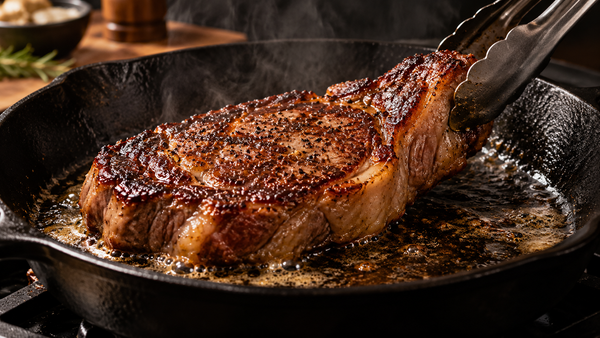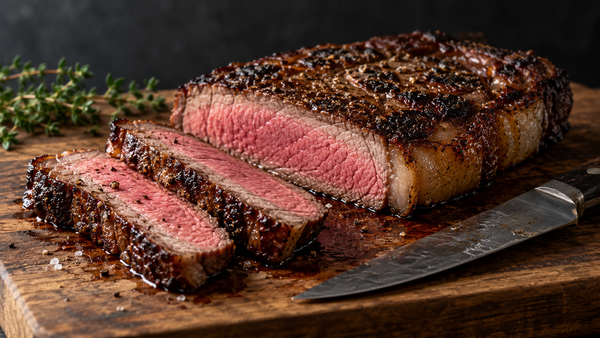

Steak sticking to the pan usually comes from the wrong heat, too little fat, a wet surface or trying to turn it before it releases.
The fix depends on your pan and on what is happening underneath the meat, so turning the burner higher is not a universal answer.
Check for burning first, then look at the cooking surface, your preparation and your timing. A little early resistance on uncoated metal is quite different from a crust that has scorched onto the base.
How do you rescue steak sticking to the pan?
Stop pulling, check for burning, then give a browning steak a little more time before gently testing an edge. Repeatedly dragging a stuck steak across the pan tears away the crust you want to keep, and early adhesion on an uncoated surface can lessen as the outside cooks.
If the fat is smoking heavily or the residue is turning black, lower the heat and manage the pan safely, because waiting longer over excessive heat will not rescue the steak. Slide a suitable turner under the edge to release it, keeping your hands clear of hot fat, and never pour water into hot oil to force the meat loose.
Once it releases, carry on with your recipe, whether that is a porterhouse with a garlic tallow sear or a simple salt-and-pepper steak. Check doneness separately, because whether a steak moves freely tells you about its contact with the pan, not its internal temperature.
When dinner is under control, work through the sections below to find which part of the setup needs changing before the next steak goes in. Keep a broad turner beside the stove next time, so you are never hunting for one mid-sear.
Which pan surface are you using?

Identify the cooking surface first, because stainless steel, cast iron, enamel and non-stick each need different handling. A method that works on one can damage another or simply give disappointing results, so match the advice to the pan in front of you.
| Cooking surface | First check | Avoid assuming |
| Uncoated stainless steel | Maker's preheating and fat guidance | It needs a permanent seasoning layer |
| Seasoned cast iron or carbon steel | Heat control and seasoning condition | The highest burner setting is necessary |
| Enamel or non-stick coating | Product-specific heat and utensil limits | Bare-metal searing advice applies |
All-Clad's stainless steel guidance calls for controlled preheating and letting food release before turning, and it separates its care instructions by material. Use the instructions for your own pan, especially where a coating, handle or lid changes the limits.
Note the pan model, hob type and burner setting, not just "frying pan", because a heavy skillet on induction can behave very differently from a thinner pan on another burner. Heavy cast iron is a favourite for searing rib eye steaks, but its seasoning still needs to be sound. Start with a clean pan, too, because old burnt residue is a different problem from meat meeting a sound surface.
How much do moisture, fat and spacing matter?

Blot excess moisture, use enough suitable fat and leave room around each steak, because these steps work together. A dripping surface makes cooking harder to control, so pat the steak with kitchen paper and keep the raw-meat tray separate from the serving plate.
Skottsberg's advice on sticking covers drying the food and using enough fat, along with warming the pan appropriately. Drying alone does not make up for poor heat control, and extra oil does not remove a puddle already sitting on the meat. Whether you cook with oil, beef tallow or ghee, choose a fat suited to the recipe and temperature.
For a marinated steak, follow the recipe's draining or drying directions, and never pour raw marinade into the pan as an improvised release aid. Cook in sensible batches if the pan is crowded. Clear space also lets you slide a turner under an edge without bumping another steak or tipping hot fat towards the handle.
When comparing results, use similarly prepared steaks and change one factor at a time, rather than replacing the pan, the oil and the method all at once.
When should you try to turn the steak?
Turn the steak when a gentle nudge shows it is releasing, judged alongside browning and heat rather than a fixed stopwatch rule. If a light nudge meets firm resistance but nothing is burning, pause for a moment before trying again.
Use a utensil that suits the surface. A broad turner supports more of the steak than the tips of tongs, but metal is not appropriate for every coating. Keep the tool close to the pan and avoid forceful levering that tears the meat or scratches the surface.
Patience is not the same as neglect. Watch the edges and the heat, and if the pan is clearly overheating, fix that rather than waiting for a magic moment when every steak must release. Thin steaks can overcook while you are focused only on the crust.
Once released, turn the steak without dragging it through the pan, then keep two questions separate: whether the surface turns cleanly, and whether the centre has reached your intended endpoint. For a thick steak, a cast iron scotch fillet doneness plan helps you manage the centre once the surface is sorted.
Could heat, pan care or the steak itself be the problem?

Repeated sticking calls for a review of heat control and pan condition, not an automatic increase in burner power. Cast iron retains heat well, so a setting that helped during warm-up can become excessive later in the session.
Lodge identifies excessive heat and insufficient oil as common causes of sticking in cast iron and recommends even preheating with enough oil to coat the surface. Follow your own pan's guidance rather than copying an exact warm-up time between different cookware and hobs.
After cooking, let the pan cool as directed, clean it according to its own care instructions and remove residue rather than building the next meal on a burnt layer. Repair seasoned cookware by the maker's process, and check the permitted tools and cleaners for coated pans.
Choose the steak for the meal, then set up the pan for it. A Free Rein grass-fed scotch cube roll portioned at home gives you control over thickness, but no brand or marble score guarantees a steak will not stick. Confirm whether the product is a whole piece or already portioned before you plan the cook.
Conclusion
Steak releases cleanly when the pan, heat, fat and surface preparation all work together.
Dry the steak, give it room, let it release and check doneness on its own terms.
When your pan is ready, choose from Carnivore Society's scotch fillet selection and cook one steak at a time until the method feels second nature.