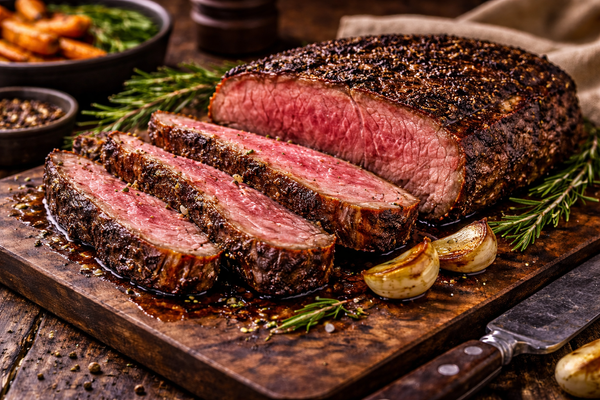
Thick Cut Scotch Fillet in Cast Iron: Doneness Timing Guide
Introduction
A thick cut scotch fillet rewards a little precision. With a single generous steak of 4 to 5cm, you can deeply sear the surface while bringing the centre to your exact preferred doneness, edge to edge. Scotch fillet, the boneless rib eye, has the marbling to stay juicy through this kind of heat, which is what makes it such a forgiving cut to cook in cast iron.
This is less a recipe and more a timing guide. High heat, a hot heavy pan, accurate internal temperatures, and a proper rest are all you need. Use a thick grass fed scotch fillet and a thermometer, and you can hit anything from rare to well done with confidence.
Ingredients
For 2 servings
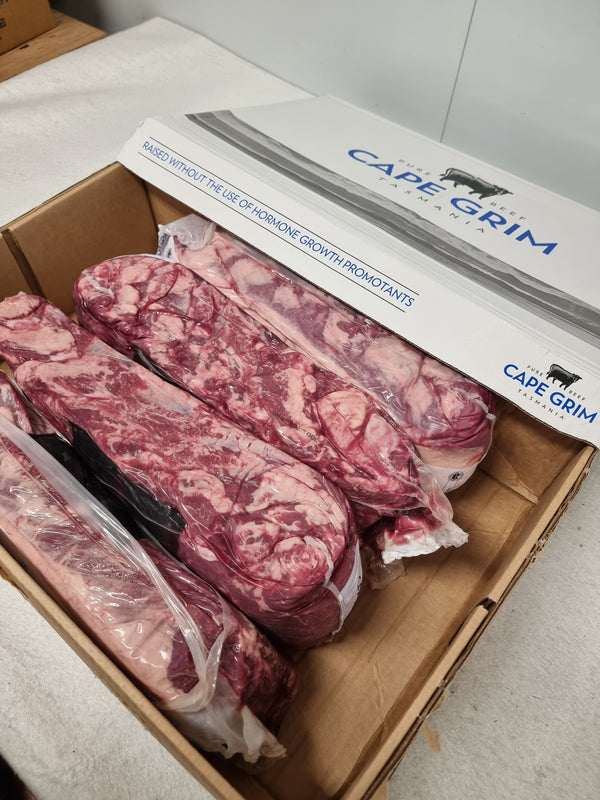
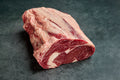
- 1 x 400-450gthick cut scotch fillet4-5cm thick, at room temperature
- 2 tspsea salt
- 1 tspblack pepperfreshly cracked
- 1 tbspbeef tallowor high smoke point oil
- 2 clovesgarliclightly crushed
- 2 sprigsthyme or rosemaryoptional
Utensils
4 items to gather · Tap to tick off
- Heavy cast iron pan
- Tongs
- Meat thermometer
- Chopping board
Cooking Steps
Season and temper
Take the steak out of the fridge 30 to 45 minutes before cooking and pat it completely dry. Season generously with salt and pepper on all sides.
Heat the pan
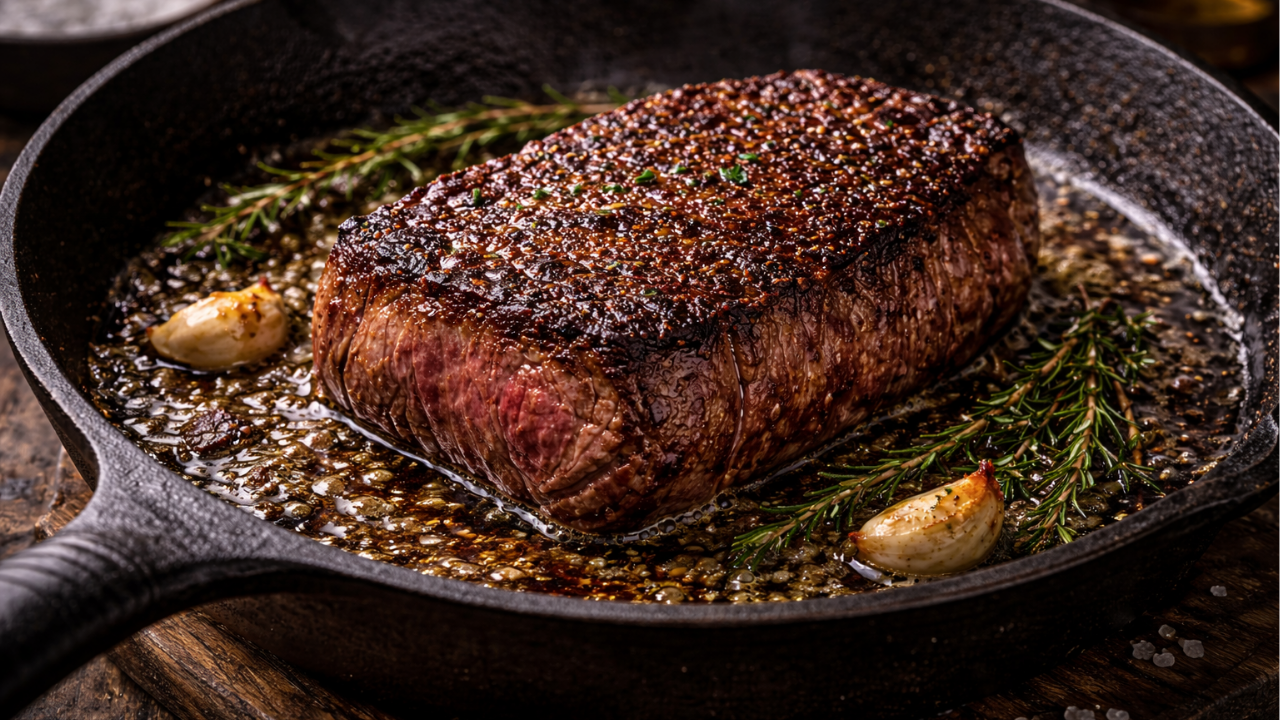
Heat a heavy cast iron pan over high heat for 3 to 4 minutes until very hot, then add the tallow and let it shimmer.
Sear the first side
Place the steak in the pan and do not move it. Sear for 3 minutes to build a deep crust.
Flip and cook to doneness
Turn the steak and cook to your target using a thermometer: rare 50 to 52°C and 3 to 4 minutes a side, medium rare 53 to 57°C and 4 to 5 minutes a side, medium 58 to 60°C and 5 to 6 minutes a side, medium well 61 to 65°C and 6 to 7 minutes a side, or well done 66 to 70°C and 7 to 8 minutes a side.
Baste
In the last 2 minutes, add the garlic and optional herbs, tilt the pan, and spoon the hot fat over the steak continuously.
Rest
Rest for 8 to 10 minutes before slicing. The internal temperature rises 3 to 5 degrees as it rests, so pull it a touch early.
Slice and serve
Slice against the grain and serve immediately.
Nutrition
Per Serving
Recipe serves 2Nutritional values are estimates only and may vary based on specific ingredients, brands, cuts, cooking method, and portion sizes. For medical or dietary purposes, please consult a qualified nutritionist.
Tips and Pairing
People Also Ask
How long do you cook a thick scotch fillet in cast iron? +
For a 4 to 5cm scotch fillet, sear 3 minutes on the first side, then cook 3 to 8 minutes a side depending on doneness, from rare through to well done. Thickness matters more than weight, so lean on a thermometer and pull the steak a few degrees below target before resting.
What internal temperature should scotch fillet be? +
Aim for 50 to 52°C for rare, 53 to 57°C for medium rare, 58 to 60°C for medium, 61 to 65°C for medium well, and 66 to 70°C for well done. These are pull temperatures, so remove the steak a touch early since it climbs 3 to 5 degrees while resting.
Why cook scotch fillet in cast iron? +
Cast iron holds and radiates high heat evenly, which is exactly what a thick steak needs to build a deep crust without the pan dropping temperature when the meat goes in. It also moves from searing to basting easily, giving you steakhouse results at home.
Should you rest scotch fillet after cooking? +
Yes. Rest a thick scotch fillet for 8 to 10 minutes so the juices settle and the centre finishes through carryover heat. Skipping the rest pushes the juices onto the board when you slice, leaving the steak drier than it should be.
How thick should a scotch fillet be for this method? +
Around 4 to 5cm is ideal. A thick cut gives you room to build a hard crust on the outside while keeping a wide band of your chosen doneness in the centre. Thinner steaks cook too fast to control precisely with this searing approach.