Porterhouse Steak Reverse Sear Method
Introduction
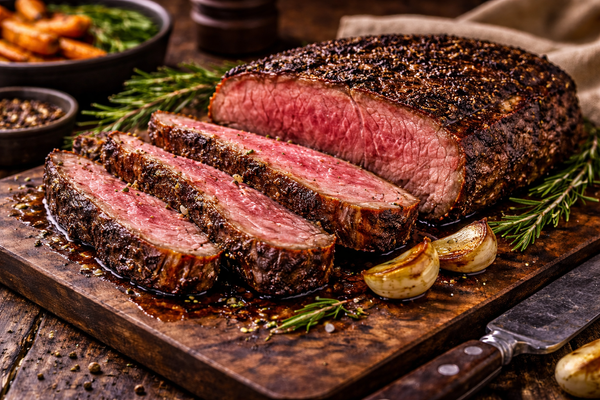
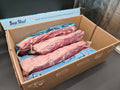
The reverse sear is the most reliable way to cook a thick porterhouse to an even, edge to edge doneness with a deep crust. In Australia, porterhouse is the boneless striploin, a firm, fine grained steak with a fat cap that crisps beautifully under high heat. Cooking it slowly first, then searing hard, avoids the grey band a hot pan alone can leave.
This method suits a thick grass fed porterhouse of 4cm or more. Warm it through gently in a low oven, then finish with a fierce sear.
Ingredients
For 2 servings
- 2 x 300gporterhouse steaks4cm thick, at room temperature
- 2 tspsea salt
- 1 tspblack pepper
- 1 tbspbeef tallow
- 30gbutteroptional
- 2 sprigsthymeoptional
Utensils
5 items to gather · Tap to tick off
- Wire rack and oven tray
- Heavy pan
- Meat thermometer
- Tongs
- Chopping board
Cooking Steps
Season
Pat the steaks dry and season generously with salt and pepper.
Slow roast
Sit the steaks on a wire rack over a tray and cook in a 120°C oven until the centre reaches 48 to 50°C, usually 25 to 35 minutes.
Rest briefly
Rest the steaks while you heat a heavy pan very hot with the tallow.
Sear
Sear the steaks for about 1 minute per side, plus the fat edge, until a deep crust forms. Add the optional butter and thyme to baste.
Rest
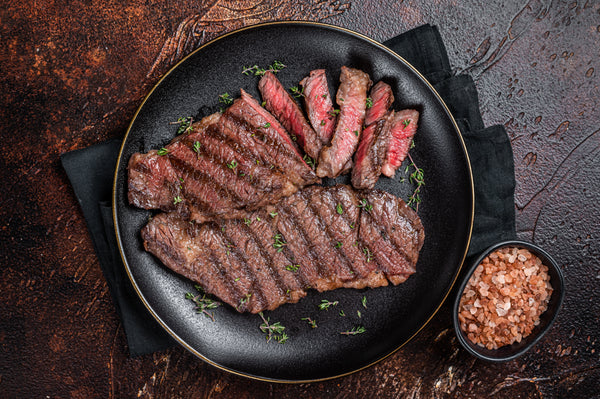
Rest for 5 to 8 minutes. The centre settles to a juicy medium rare.
Slice and serve
Slice against the grain and serve.
Nutrition
Per Serving
Recipe serves 2Nutritional values are estimates only and may vary based on specific ingredients, brands, cuts, cooking method, and portion sizes. For medical or dietary purposes, please consult a qualified nutritionist.
Tips and Pairing
People Also Ask
What is the reverse sear method? +
Reverse searing cooks the steak slowly in a low oven first to bring the centre up evenly, then finishes it with a fast, hot sear for the crust. It is the opposite order to traditional cooking and gives you edge to edge doneness with no grey band, which is ideal for thick cuts.
Is porterhouse good for reverse searing? +
Yes, a thick porterhouse of 4cm or more is well suited to reverse searing. The gentle oven phase cooks the firm striploin evenly, and the hot sear crisps the fat cap and builds a crust. Thinner steaks cook too quickly to benefit, so save the method for thick cuts.
What temperature do you pull porterhouse in the oven? +
Pull the porterhouse from the oven at 48 to 50°C, then sear it hard. After searing and resting, it settles to a medium rare 54 to 56°C. Because the sear and rest add heat, starting a few degrees low in the oven stops it overshooting your target doneness.
How long does reverse sear take? +
Allow about 25 to 35 minutes in a 120°C oven for a 4cm porterhouse to reach 48 to 50°C, then a minute or so per side to sear, plus a rest. Times vary with thickness and oven, so use a thermometer rather than the clock for the oven phase.
Is porterhouse the same as T-bone? +
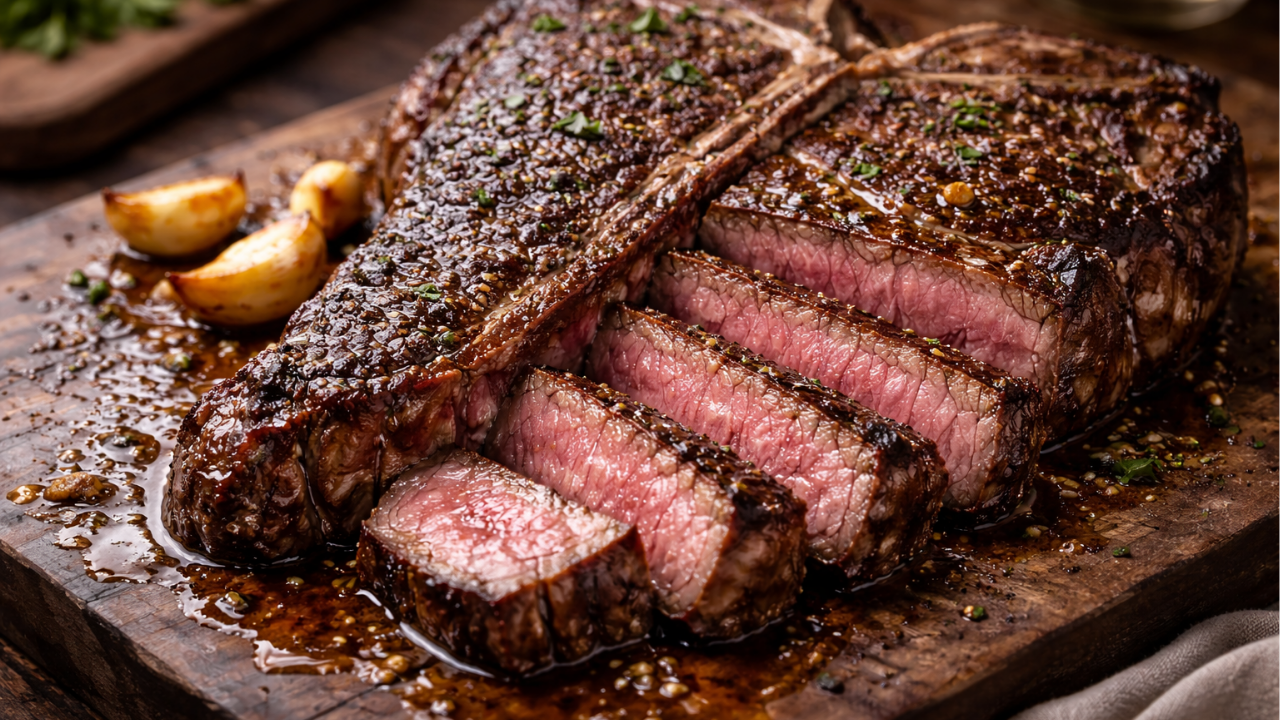
They are related. A T-bone has the bone with both the striploin and a smaller piece of eye fillet attached. In Australia, porterhouse usually refers to the boneless striploin on its own. This recipe uses the boneless porterhouse, but the method works for a T-bone too.