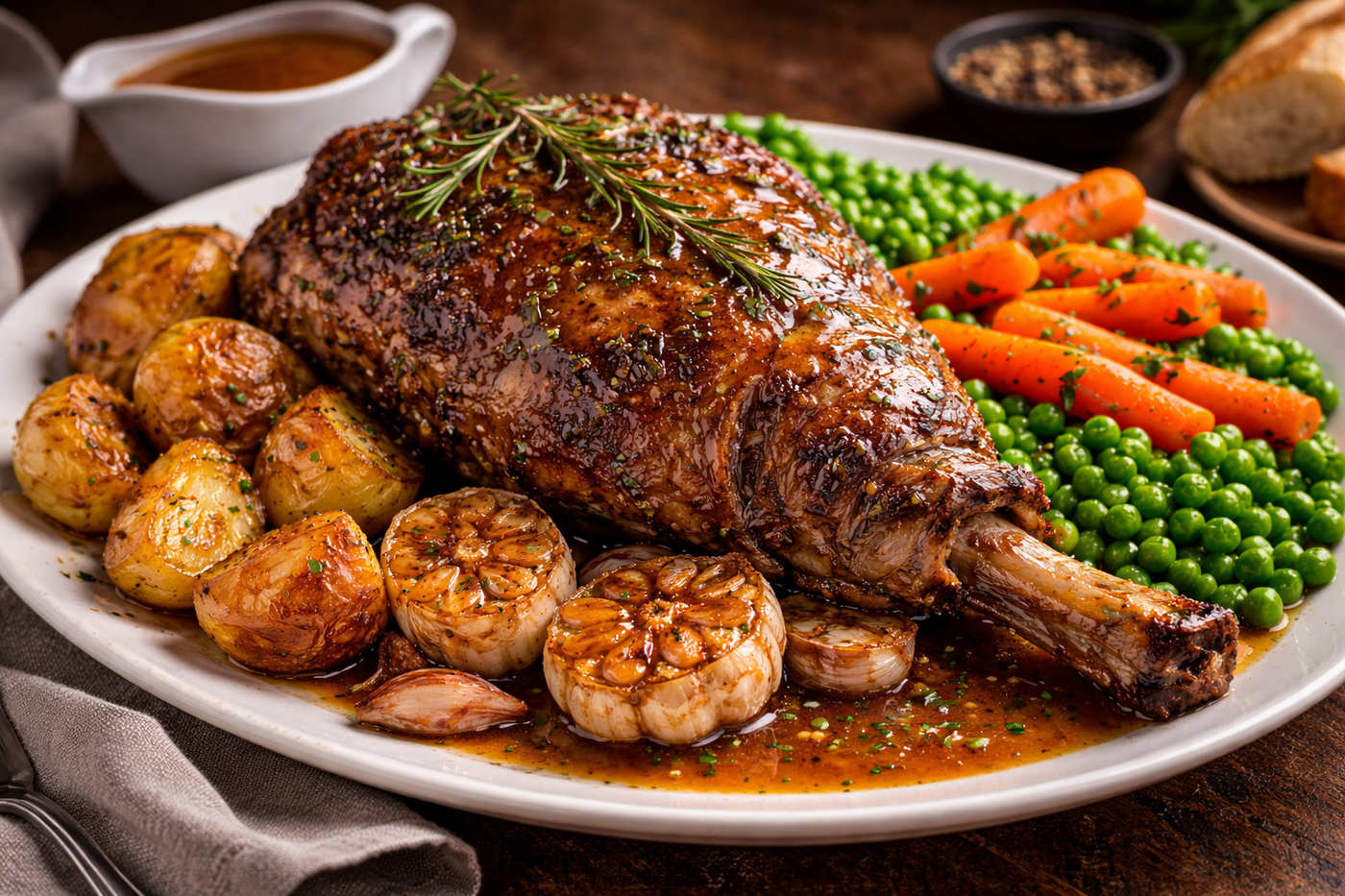
Slow Roasted Lamb Leg with Pan Drippings
Introduction
A slow roasted lamb leg is a classic centrepiece for good reason. Cooked low and slow with garlic, rosemary, thyme, and bay, the meat turns meltingly tender while the outside crisps, and the pan drippings reduce into a rich, smooth sauce that ties the whole plate together.
This method is forgiving and generous, ideal for a Sunday roast or a festive table. A good grass fed lamb leg needs little more than aromatics and time, with the gravy made straight from the tray.
Ingredients
For 6 servings
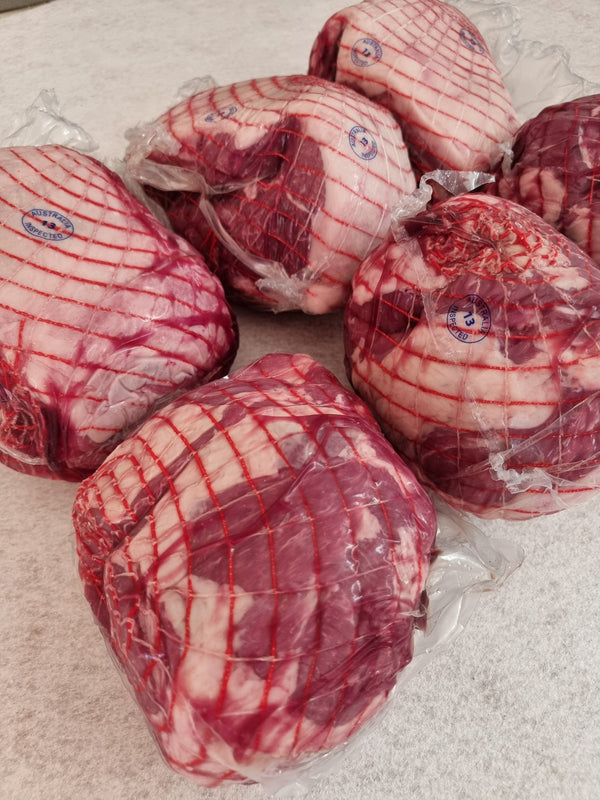
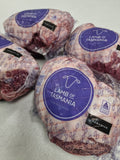
- 2-2.5kglamb legbone-in or boneless
- 4 clovesgarlicsliced
- 3 sprigsrosemaryfresh
- 3 sprigsthymefresh
- 2bay leaves
- 2 tbspolive oilor tallow
- 250mlstock or waterfor the tray
- salt and pepperto season
- 1 tbspplain flouroptional, to thicken the gravy
Utensils
6 items to gather · Tap to tick off
- Roasting tray
- Aluminium foil
- Small knife
- Whisk
- Carving knife
- Chopping board
Cooking Steps
Season and stud
Pat the lamb dry. Make small incisions over the leg and push in slivers of garlic and sprigs of rosemary. Rub with oil and season generously with salt and pepper.
Sear
Brown the lamb in a hot roasting tray, or in the oven at high heat for 20 minutes, to start the crust.
Slow roast
Lower the oven to 150°C. Add the thyme, bay, and stock to the tray, cover loosely with foil, and roast for 3.5 to 4 hours until the meat is very tender. Uncover for the last 30 minutes to crisp the outside.
Rest
Rest the lamb loosely tented for 15 to 20 minutes while you make the gravy.
Make the pan gravy
Skim excess fat from the tray, set it over heat, whisk in the optional flour, and add a little stock or water. Simmer and scrape up the drippings into a smooth sauce, then season.
Carve and serve
Carve the lamb and serve with the pan gravy spooned over.
Nutrition
Per Serving
Recipe serves 6Nutritional values are estimates only and may vary based on specific ingredients, brands, cuts, cooking method, and portion sizes. For medical or dietary purposes, please consult a qualified nutritionist.
Tips and Pairing
People Also Ask
How long does it take to slow roast a lamb leg? +
A 2 to 2.5kg lamb leg takes about 3.5 to 4 hours at 150°C to become meltingly tender, after an initial high heat sear. For pink, medium lamb instead, roast hot and pull at 60 to 65°C. The slow method is more forgiving and gives you fall apart meat and a rich tray of drippings.
Should you cook lamb leg covered or uncovered? +
Cover the lamb loosely with foil for most of the slow roast to keep it moist and tender, then uncover it for the last 30 minutes so the outside browns and crisps. This gives you the best of both, juicy meat inside and a well coloured, flavourful exterior.
Bone-in or boneless lamb leg, which is better? +
Both work well for slow roasting. Bone-in lamb has a little more flavour and stays slightly juicier, while boneless is far easier to carve and serve evenly. Choose bone-in for a traditional centrepiece, or boneless for convenience, and adjust the timing slightly for the thickness.
How do you make gravy from lamb drippings? +
Skim most of the fat from the roasting tray, set it over heat, and whisk in a little flour if you want it thicker. Add stock or water and simmer, scraping up the caramelised drippings, until smooth. Season at the end. This pan gravy carries all the roasted lamb and herb flavour.
How long should you rest a roast lamb leg? +
Rest a lamb leg for 15 to 20 minutes, loosely tented with foil, before carving. Resting lets the juices settle back through the meat so the slices stay moist. It also gives you time to finish the gravy, and the lamb holds its heat well under foil while it rests.