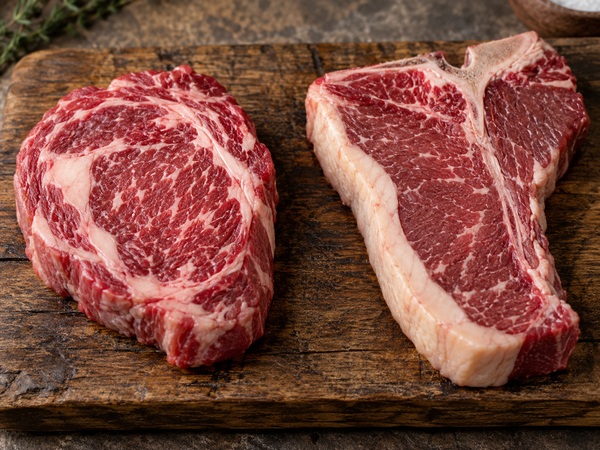

Butchers age beef in temperature and humidity controlled rooms for 21 to 60 days, letting natural enzymes tenderise the meat while slow moisture loss concentrates its flavour.
It is the oldest trick in the butchery book, and still the most misunderstood.
This guide walks through the dry ageing process step by step: the conditions a butcher controls, what ageing actually does to flavour and texture, how dry aged compares with wet aged, and how to buy dry aged beef with confidence.
What Is Dry Aged Beef?
Dry aged beef is beef that has been held uncovered in a controlled cold environment for weeks, so enzymes tenderise the muscle and moisture loss intensifies the flavour. Unlike fresh beef, which is cut and sold within days, a dry aged primal rests until it develops a dark outer crust and a deeply savoury character underneath.
The result eats differently: more tender, more concentrated, with the nutty, umami-rich notes steak lovers pay steakhouse prices for. Whether that premium is worth it for your table is a question we answered in our guide to dry aged beef and why it is worth the hype; this article is about how it is actually done.
How Butchers Dry Age Beef, Step by Step

Dry ageing is controlled decay: the butcher's job is to hold the meat in conditions where enzymes work and spoilage cannot. The process runs in five steps.
- Select the right primal. Only large, well-marbled, bone-in cuts age well: whole rib sections and striploins are the classics. The bone and fat cap shield the meat while the interior transforms.
- Set the chamber. The ageing room holds around 1 to 3°C, roughly 75 to 85 percent humidity, with constant airflow. Too warm or humid invites spoilage; too dry and the meat case-hardens before the enzymes finish.
- Give it space. Primals sit on racks with air moving across every surface, never stacked or wrapped. Even airflow is what builds a dry, protective crust rather than wet patches.
- Monitor for weeks. The butcher checks temperature, humidity, smell and crust daily. The pellicle, the dark outer crust, forms in the first fortnight and shields the meat beneath.
- Trim and cut. After ageing, the crust is trimmed away and the primal is cut into steaks. Between moisture loss and trim, a primal typically gives up around a quarter to a third of its starting weight, which is the honest reason dry aged beef costs more.
What Ageing Does to Flavour and Texture
Ageing works on two fronts: enzymes break down connective tissue for tenderness, while evaporation concentrates everything you taste. The meat's own enzymes slowly dismantle the proteins and connective tissue that make muscle chewy, doing the work no marinade can.
Meanwhile, water leaves the meat day by day. What remains is a denser, more intense version of itself: deeper beef flavour with the nutty, buttery, blue-cheese-adjacent notes that define a great aged steak. Marbling matters here, which is why well-graded beef ages best; our explainer on why MSA grade beef matters covers the grading side, and the base flavour depends on feeding, as we cover in why grass fed beef tastes better.
Dry Aged vs Wet Aged Beef
Dry ageing happens in open air and concentrates flavour; wet ageing happens inside a vacuum bag and tenderises without changing the taste much.
| Dry aged | Wet aged | |
| Method | Uncovered in a controlled chamber | Sealed in its own juices in cryovac |
| Time | 21 to 60 days | 7 to 21 days, often in transit |
| Flavour | Concentrated, nutty, umami-rich | Fresh, unchanged, slightly metallic tang |
| Weight loss | Significant (moisture plus trim) | Minimal |
| Price | Premium | Standard |
Most beef sold in Australia is wet aged by default, since cryovac transit ages it on the way. Dry ageing is the deliberate, labour-intensive version, and the flavour difference is the entire point.
How Long Should Beef Be Aged?

Most dry aged beef is aged 21 to 35 days, with 60 days and beyond reserved for serious enthusiasts.
| Days aged | What you get |
| 21 days | Noticeably more tender, first hints of aged flavour; the entry point |
| 35 days | The sweet spot: clear nutty, umami depth with balanced funk |
| 60 days | Intense, blue-cheese-edged character; smaller yield, bigger price |
Bone-in rib and striploin suit ageing best, the same rib section behind the scotch fillets and tomahawks in our butchers' favourite cuts. Lean cuts like eye fillet gain little and lose too much weight to justify it.
Can You Dry Age Beef at Home?
Genuine dry ageing at home is risky without dedicated equipment, because a kitchen fridge cannot hold the stable temperature, humidity and airflow the process demands. Opening the door daily swings the conditions, and ageing anything smaller than a whole primal mostly produces trim loss, not flavour.
A purpose-built ageing fridge changes the equation for committed hobbyists, but for everyone else the honest answer is: buy it aged by someone with a chamber, and keep your fridge for what it does well. Standard cryovac cuts keep beautifully, as our guide to how long steak lasts in the fridge explains.
Where to Buy Dry Aged Beef in Australia
Buy dry aged beef from a butcher who can tell you the cut, the days aged and the grading, whether at the counter or online with cold-chain delivery. Vague aged beef labels with no timeframe are a warning sign; genuine dry ageing is a specification, not a vibe.
Expect to pay a real premium over fresh cuts of the same grade, and remember what you are paying for: weeks of chamber time, daily attention and a quarter to a third of the weight trimmed away. That is craft, not markup.
If you are ordering online for the first time, our guide to buying premium steak online in Australia covers delivery, packaging and what to check when the box arrives.
Explore Our Graded Beef Range
Dry ageing is butchery's slowest craft: weeks of controlled temperature, humidity and airflow that trade weight for flavour no shortcut can fake. Now that you know how it is done, you know exactly what the premium buys.
Explore our graded, grass fed beef range, delivered cryovac sealed Australia-wide.