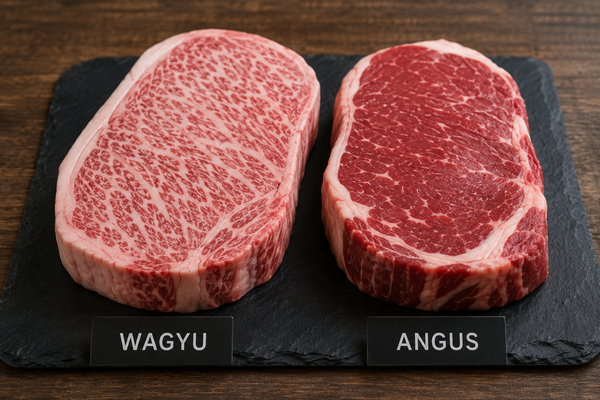

The scotch fillet vs porterhouse question comes down to where the fat sits.
Scotch fillet carries its fat inside the muscle, which makes it richer and more forgiving to cook. Porterhouse is leaner, firmer and carries a fat cap along one edge.
Both are premium steaks from the same side of the animal, and the right choice depends on how you cook and what you want on the plate.
Scotch Fillet and Porterhouse: The Same Steaks Under Different Names
Scotch fillet is the Australian name for boneless rib eye, cut from the rib, and porterhouse is the Australian name for the striploin or sirloin, cut from the short loin.
Most of the confusion around these two steaks is a naming problem rather than a meat problem. Australian butchers, American recipes and British cookbooks all use different words for the same cuts, so a reader following a US recipe for striploin can easily buy the wrong thing here.
One warning worth noting: in the United States, porterhouse means something else entirely. There it refers to a bone-in T-bone steak with a large tenderloin section, not the boneless striploin Australians call porterhouse.
| Australian name | United States | United Kingdom | Primal |
|---|---|---|---|
| Scotch fillet | Rib eye | Rib eye | Rib (cube roll) |
| Porterhouse | New York strip, strip loin | Sirloin | Short loin (striploin) |
| Eye fillet | Filet mignon, tenderloin | Fillet | Tenderloin |
| Rump | Top sirloin | Rump | Rump |
Scotch Fillet vs Porterhouse at a Glance
Scotch fillet is the fattier, softer and more richly flavoured of the two, while porterhouse is leaner, firmer and gives a cleaner beef flavour with a better defined bite.
The comparison below covers the differences that actually change what you buy. Marble scores are typical ranges for premium Australian grass-fed and grain-fed beef, and will vary by producer and grade.
| Feature | Scotch fillet | Porterhouse |
|---|---|---|
| Primal | Rib | Short loin |
| Marbling | High, spread through the muscle | Moderate, concentrated in the fat cap |
| Fat cap | Minimal | Pronounced along one edge |
| Tenderness | Very tender, soft texture | Tender with a firmer bite |
| Flavour | Rich and buttery | Clean, beef-forward |
| Forgiveness when cooking | High, internal fat protects it | Lower, overcooks more easily |
| Best method | Hot grill, cast iron, reverse sear | Cast iron, grill, fat cap rendered first |
| Typical price | Higher per kilogram | Slightly lower per kilogram |
Scotch Fillet: Rich, Marbled and Forgiving

Scotch fillet is the cut to buy when you want richness and a wide margin for error, because the fat running through the muscle bastes the steak from the inside as it cooks.
It comes from the cube roll, the rib section that sits directly behind the chuck. That part of the animal does relatively little work, which is why the muscle stays soft and why the fat deposits so evenly through it. The result is a steak that eats tender even when it is pushed slightly past where you meant to stop.
You also get the spinalis, the crescent-shaped cap around the outer edge. It is the most marbled part of the whole cut and, for many people, the best few bites on the plate. Provenance shows up strongly here, which is why a Bass Strait cube roll eats so differently from a commodity rib eye.
How to cook a scotch fillet
Cook it hot and fast on cast iron or a well-heated grill, turning every minute so the internal fat renders evenly. Pull it at medium rare to medium and rest for five minutes. Our step by step scotch fillet method covers the timings.
Porterhouse: Leaner, Firmer, With a Fat Cap Worth Rendering
Porterhouse is the better choice when you want a cleaner beef flavour and a steak that slices neatly, though it needs more attention because there is less internal fat protecting it.
Cut from the short loin, porterhouse has a tighter grain than scotch fillet and a noticeably firmer chew. That is not a fault. It is what people mean when they say a steak tastes properly of beef rather than of fat, and it is why porterhouse is the default steak on a lot of Australian restaurant menus.
The fat cap along one edge is the part most home cooks waste. Rendered properly it produces a crisp, deeply savoury strip and adds flavour to the whole steak. Left unrendered it stays soft and unpleasant, and usually ends up cut off and thrown away.
How to cook a porterhouse
Stand the steak on its fat edge in a hot dry pan for a minute or two first, until the fat renders and browns. Then lay it flat, cook to medium rare, and rest. Do not push it past medium, since the leaner muscle dries out quickly.
Marbling, MSA Grading and What the Label Actually Tells You
Marble score measures the amount of intramuscular fat on a scale from 0 to 9, and MSA grading predicts eating quality from the whole production chain, so the two together tell you far more than the cut name alone.
A high marble score scotch fillet and a low marble score scotch fillet are genuinely different products. The same is true of porterhouse. Comparing the two cuts without checking the grade is like comparing two bottles of wine by the shape of the bottle.
Feeding matters too. Grain finishing generally lifts marbling, while grass-fed and finished beef tends to give a leaner steak with a more mineral, savoury flavour, which is why marbling differs between grain-fed and grass-fed beef even within the same cut.
When you are choosing, read the marble score and the grade before the cut name. Our guide to why MSA grading matters explains how the system works and what to look for on a spec sheet.
Which One Should You Buy?
Buy scotch fillet for a rich, indulgent steak and for anyone who cooks by feel rather than by timer, and buy porterhouse for a leaner steak, for slicing, and for better value per kilogram.
For a barbecue with guests, scotch fillet is the safer bet, since it survives the variable heat of a grill and the distraction of company. For a controlled cook on cast iron where you want a precise medium rare and a crisp fat edge, porterhouse rewards the attention.
For meal prep, porterhouse is the stronger option. It slices cleanly, holds its texture cold, and its lower fat content means it does not turn greasy when reheated. Scotch fillet is best eaten the moment it comes off the heat.
On value, porterhouse generally sits below scotch fillet per kilogram, so it is the better everyday steak. Save the scotch fillet for the meals that deserve it, and our guide to the best steaks for special occasions covers where each one fits.
Choose on Fat, Not on Name
Scotch fillet gives you richness and room for error. Porterhouse gives you a cleaner flavour, a firmer bite and better value. Neither is objectively better, so choose on how you cook and what the meal is for. Browse both in our grilling steak range.