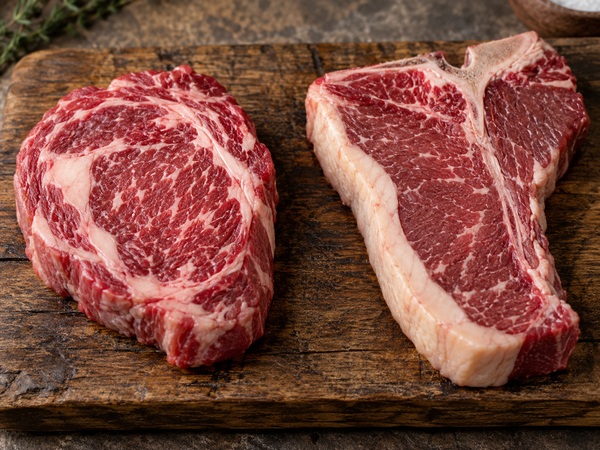

The best wagyu steak is the one that balances marble score, breeding and cut against how you actually plan to eat it.
A wagyu steak is not one product: prices in our range run from $55 to over $200 per kilogram depending on those three factors.
This guide explains what makes wagyu different, how marble scores work, Australian versus Japanese wagyu, fullblood versus crossbred, and which cut to choose, so you can buy with confidence rather than paying for a label.
What Makes Wagyu Different?
Wagyu is a group of Japanese cattle breeds genetically predisposed to marbling, laying down fine intramuscular fat that ordinary beef cannot match. That fat melts at a lower temperature, which is why wagyu eats richer, softer and more buttery than any standard steak.
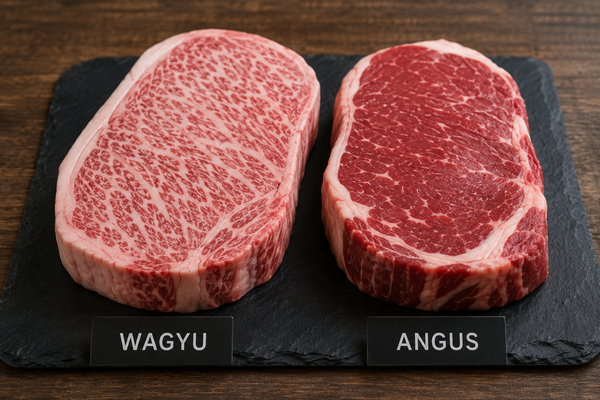
Angus versus wagyu is the comparison most buyers make. A good Angus scotch fillet typically marbles around MB2 to MB4 and delivers a classic, beef-forward steak. Wagyu starts where Angus stops: MB4 upward, climbing to MB9+ where the meat is more cream than red. Neither is better in the abstract; Angus suits everyday steaks, wagyu suits richness and occasion.
If you are still deciding whether the step up is for you, our guide on why wagyu beef is worth trying covers the eating experience in more depth.
Wagyu Marble Scores Explained

Australian wagyu is graded on the AUS-MEAT marble score scale from 0 to 9+, and the number tells you how much intramuscular fat the cut carries. Japan uses its own Beef Marbling Standard (BMS) from 1 to 12, which is where A5 wagyu sits at the top. More is not automatically better; it is a question of how rich you want each mouthful to be.
| Marble score | What it delivers | Best suited to |
| MB4 to 5 | Noticeably richer than Angus, still steak-like | First wagyu, regular grilling |
| MB6 to 7 | Pronounced richness, silky texture | Weekend cooking, small dinner parties |
| MB8 to 9+ | Intense, melt-in-mouth, small portions | Occasions, tasting-style servings |
Marbling is the single biggest driver of price, so knowing your preferred band protects your budget. The full mechanics are in our ultimate guide to wagyu beef marbling.
Australian vs Japanese Wagyu
Japanese A5 wagyu is the most intensely marbled beef in the world, while high marble score Australian wagyu offers most of that experience at a fraction of the price and in larger portions. A5 denotes Japan's top yield and quality grade, with BMS typically 8 to 12, and it is best eaten in thin slices of 100 to 150 g.
Australian wagyu, raised from Japanese genetics and typically grain-finished for 300 to 450 days, is graded MB0 to 9+ and cut in familiar steak formats. An Australian MB8 to 9 scotch fillet gives you a genuine occasion steak you can cook like a steak, not a delicacy you portion like sashimi.
The honest guidance: choose A5 for a once-in-a-while tasting experience, and Australian MB6 to 9 for steaks you actually cook at home. Availability also favours local: Australian wagyu ships fresh, cryovac sealed, Australia-wide.
Fullblood vs Crossbred Wagyu
Fullblood wagyu comes from 100% wagyu genetics with no crossbreeding, while F1 crossbred wagyu is typically a 50% wagyu and Angus cross. The distinction matters because both are legally sold as wagyu in Australia, at very different prices.
Fullblood animals, like those in the Stone Axe program we stock, produce the most consistent, dense marbling and command the highest prices. F1 crossbred wagyu, like our Black Opal and Oishi ranges, blends wagyu marbling with Angus structure and is the smart entry point: an F1 MB8 to 9 scotch fillet delivers serious richness at well under fullblood pricing.
Before paying fullblood money, check the label states fullblood (not just wagyu or wagyu cross) and that a marble score is declared. A high price with no stated marble score is a red flag anywhere you shop.
How Much Does Wagyu Steak Cost in Australia?
In Australia, wagyu steak typically costs between $55 and $220 per kilogram, driven by marble score, breeding and cut. These are real prices from our own range, per kilogram, buying by the piece or box:
| Cut and breeding | Marble score | Price per kg (AUD) |
| Wagyu rump | MB8 to 9 | $55 to $65 |
| F1 wagyu porterhouse | MB3+ | $73 to $83 |
| Crossbred wagyu porterhouse | MB4 to 5 | $81 to $86 |
| Wagyu scotch fillet | MB6 to 7 | $119 to $129 |
| Wagyu scotch fillet | MB8 to 9 | $139 to $149 |
| Fullblood scotch fillet | MB8 to 9+ | $199 to $209 |
| Fullblood eye fillet | MB8 to 9+ | $209 to $219 |
Two levers bring the price down without compromising quality: choose a harder-working cut like rump or porterhouse rather than scotch or eye fillet, and buy half or full boxes rather than single pieces, which trims $5 to $10 per kilogram.
Choosing the Right Wagyu Cut

Scotch fillet is the definitive wagyu steak, porterhouse is the balanced all-rounder, rump is the value play, and eye fillet is the tenderness pick. Because marbling amplifies whatever the cut already does, match the cut to the occasion before you choose the score.
Wagyu rump deserves particular attention: it carries genuine MB8 to 9 marbling from $55 per kilogram, making it the cheapest way to eat high marble score wagyu regularly. Porterhouse keeps a firmer bite that suits buyers who find scotch fillet too rich. Our wagyu cuts breakdown compares every option, and the full range with current marble scores and prices is in our Australian wagyu collection.
Cook high marble score cuts a touch more gently: the fat renders fast, so medium rare arrives sooner than with grass fed beef.
Browse Australian Wagyu, Graded and Delivered
Choosing the best wagyu steak comes down to three calls: the marble score band you enjoy, fullblood versus crossbred for your budget, and the cut that fits the occasion. Set those and the label does the rest.
Browse our Australian wagyu range, graded and delivered fresh, cryovac sealed, Australia-wide.