
Meat traceability means every animal's journey is recorded from farm to plate, and Australia runs one of the most comprehensive systems in the world.
Meat traceability in Australia is the quiet reason you can trust the beef on your table: it protects food safety, proves provenance and keeps dishonest products out of the supply chain.
This guide explains how the National Livestock Identification System works, why it matters to you as a buyer, and how Carnivore Society puts traceability into practice on every order.
What Is Meat Traceability?
Meat traceability is the ability to track an animal, and the meat from it, through every stage of its life: the farm where it was born, every property it moved through, the processor, and the product that reaches your plate.
Each step is recorded, so any cut of beef can be traced back through the chain in minutes rather than weeks. That record includes where the animal lived, how it moved between properties and where it was processed.
Traceability sits alongside transparency as the twin foundation of trustworthy meat. We explored the buyer side of this in our piece on transparency in meat production; traceability is the system that makes transparency provable.
How Australia Tracks Every Animal: NLIS Explained

Australia tracks livestock through the National Livestock Identification System (NLIS), which records every animal's movements electronically in a national database for life.
It works in steps. Every animal receives an electronic ear tag linked to its property of birth. Each time it moves between properties, saleyards or processors, the movement is scanned and logged in the NLIS database. A National Vendor Declaration travels with every consignment, recording treatments and history. At processing, the identification carries through so meat can be traced back to source.
The wider Red Meat Integrity System, overseen with Meat & Livestock Australia, ties these records to food safety declarations, giving Australia lifetime traceability across the national herd.
Why Traceability Protects You as a Buyer
Traceability protects buyers in three ways: rapid food safety responses, disease control, and protection against food fraud.
If a food safety issue ever emerges, authorities can trace affected product to its source within hours and recall it precisely, rather than guessing at entire categories. The same speed applies to disease response, which is how Australia protects its clean, disease-free herd status.
Fraud protection matters more than most buyers realise. Substitution and false origin claims exist in global meat markets, and a lifetime-traceable supply chain makes them extremely hard to pull off. When a supplier can show where a cut came from, the label stops being a promise and becomes a record.
Why the World Trusts Australian Beef
Australia's traceability system is a key reason its beef commands premium prices in export markets.
Importing countries demand proof of origin, health status and safe handling, and Australia's lifetime traceability provides it at a standard few competitors match. That documentation underpins access to demanding markets across Asia, the Middle East, Europe and North America.
For Australian buyers there is a satisfying flip side: the beef you order locally carries the same integrity systems the world pays a premium for. Provenance is also becoming a quality story in its own right, as we cover in ethical Wagyu farming in Australia, where farm identity and animal history are part of what you are buying.
What Australian Buyers Want to Know
Australian shoppers increasingly expect provenance: a Meat & Livestock Australia report found 67% of Australians actively look for more detail about their meat.
The questions worth asking any supplier are simple. Which farm or region did this come from? How was the animal raised and finished? What do the certifications on the label actually verify? Our guide to which certifications matter for ethical meat breaks down the logos you will see.
A supplier who welcomes those questions is a supplier using traceability as it is meant to be used: not as compliance paperwork, but as proof of a product worth standing behind.
How Carnivore Society Puts Traceability into Practice
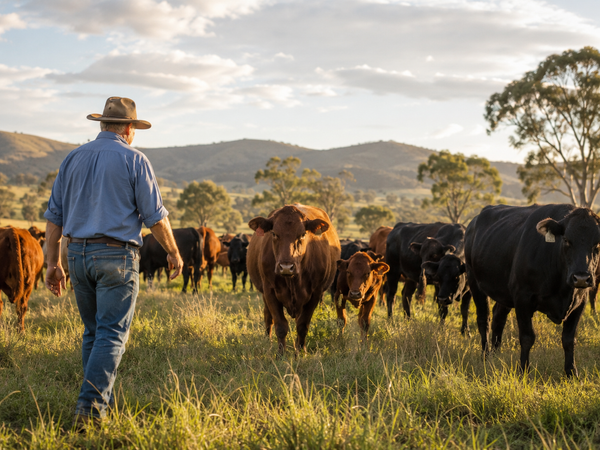
Carnivore Society buys farm-direct from named Australian producers, so every cut in our range can be traced to the farms and regions it came from.
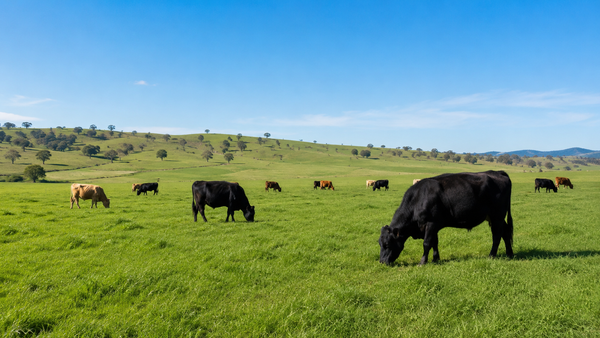
Buying direct keeps the chain short. Fewer steps between paddock and plate means fewer places for provenance to blur, and it lets us verify how cattle were raised, fed and handled before a cut ever reaches the range. We choose 100% grass fed and finished beef from producers whose practices we know first-hand, part of what sets our sourcing apart.
When you order from us, traceability is not an abstract industry system. It is the reason we can tell you where your beef came from, and mean it.
Order Fully Traceable Australian Beef
Traceability is the foundation of trust in the meat industry: it protects food safety, proves provenance and keeps the label honest. Australia leads the world at it, and Carnivore Society builds on that system with farm-direct sourcing.
Order fully traceable, 100% grass fed and finished beef, delivered Australia-wide.